Urban agriculture Wikipedia
Table of Content
Community centers like Florida House provide urban areas with a central location to learn about urban agriculture and to begin to integrate agriculture with the urban lifestyle. Urban farming initiatives across the State of Illinois, including Chicago, have been spearheaded by advocacy groups. In addition, HB3418 allows municipalities and counties across the state, including Chicago, to establish urban agriculture zones , supported by financial incentives such as reduced water rates, utility fees, and property tax abatements. Furthermore, the USDA has implemented the Outreach and Technical Assistance for Socially Disadvantaged and Veteran Farmers and Ranchers Program which was transferred from USDA's National Institute of Food and Agriculture. Only shallow-rooted plant can grow on roofs, eliminating crops such as potatoes and corn. Some local farmers point out that the industrial systems are subsidized and are unfair competition.
Not even 5% of the urban farms could be considered according to total gross sales statistics. Most urban farms agree on the main challenges that they face; production costs, managing pests, managing weeds, and climate. They also see profitability, financing, and farm labor as big challenges of managing an urban farm. As the population grows and industry advances, the city tries to incorporate potential agricultural growth by experimenting with new agricultural methods.
Continuous-flow solution culture
The idea of supplemental food production beyond rural farming operations and distant imports is not new. It was used during war and depression times when food shortage issues arose, as well as during times of relative abundance. Allotment gardens emerged in Germany in the early 19th century as a response to poverty and food insecurity. Using chemical equipment for hydroponic solutions can be beneficial to growers of any background because nutrient solutions are often reusable.
In aquaponics, you do not need to replace your water; you only top it off as it evaporates. Overwatering can result in flooding, evaporation, runoff, soil compaction, prevent air to get to the roots and kill plants with saturation. Alternatively, too little water, hot dry climates, drought and water shortages can wreak havoc on plant growth and can easily result in plant death as well.
Green Spirit Hydroponics.
Some community urban farms can be quite efficient and help women find work, who in some cases are marginalized from finding employment in the formal economy. Studies have shown that participation from women have a higher production rate, therefore producing the adequate amount for household consumption while supplying more for market sale. Modern planning and design initiatives are often more responsive to this model of urban agriculture because it fits within the current scope of sustainable design. The definition allows for a multitude of interpretations across cultures and time.

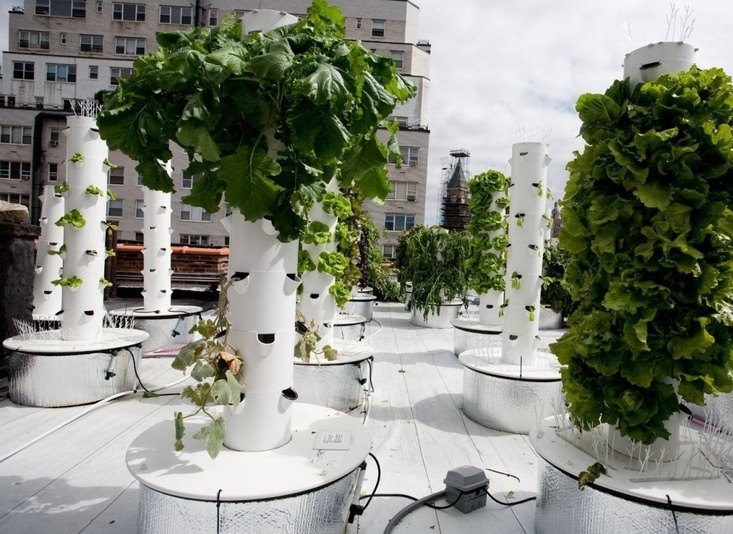
The hydroponic method of plant production by means of suspending the plant roots in a solution of nutrient-rich, oxygenated water. Traditional methods favor the use of plastic buckets and large containers with the plant contained in a net pot suspended from the centre of the lid and the roots suspended in the nutrient solution. With this method, the plants grow much faster because of the high amount of oxygen that the roots receive.
Do hydroponic plants grow faster than soil-based plants?
Industrial farms are often thousands of miles from where their food is consumed. This requires extensive transportation, refrigeration, and packaging to get the food from farm to table. Soil can be a wonderful natural resource, or a very time-consuming element to manage when you are trying to grow plants. The utilization of untreated wastewater for urban agricultural irrigation can facilitate the spread of waterborne diseases among the human population. Urban agriculture also makes the city a healthier place to live by improving the quality of the environment.

They were not intended as a complement to home or architecture, but conceived as independent spaces, arranged to grow and display flowers and ornamental plants. Gardeners demonstrated their artistry in knot gardens, with complex arrangements most commonly included interwoven box hedges, and less commonly fragrant herbs like rosemary. Sanded paths run between the hedgings of open knots whereas closed knots were filled with single colored flowers. The knot and parterre gardens were always placed on level ground, and elevated areas reserved for terraces from which the intricacy of the gardens could be viewed.
Join Women's Health+
As a cannabis cultivator, you have an array of choices when it comes to growing your own herb at home — outdoor, indoor, and greenhouse cultivation, to name a few. Could this futuristic-sounding, soil-free method be the right solution for you? In this beginner's guide to weed hydroponics, you'll learn everything you need to know to start your own hydroponic garden at home. Studies indicate that the nutritional quality of wheat suffers when urban wheat plants are exposed to high nitrogen dioxide and sulfur dioxide concentrations. This problem is particularly acute in the developing world, where outdoor concentrations of sulfur dioxide are high and large percentages of the population rely upon urban agriculture as a primary source of food.

From the highest terrace, a view extended as far as Lake Tai, the Great Lake. Follow this step-by-step guide and companion video to create a floating hydroponic garden. In 2015 the London company, Growing Underground, began the production of leafy green produce underground in abandoned underground World War II tunnels. Buyers receive six mesh pots, six preseeded coconut coir seed pods, and six plastic domes to cover newly sown seeds before they sprout.
Apart from that, wipe it down with a clean, damp rag as necessary to remove dust or grime. Finally, for the more luxurious features, some of the above picks are also smart-home compatible or come with built-in Bluetooth connectivity to let you know when your plants need some love and attention. Family Gardens have a modular design that allows you to scale the size of your Garden from 1 level to 3 levels.

Aquaponic installations rely in varying degrees on man-made energy, technological solutions, and environmental control to achieve recirculation and water/ambient temperatures. However, if a system is designed with energy conservation in mind, using alternative energy and a reduced number of pumps by letting the water flow downwards as much as possible, it can be highly energy efficient. While careful design can minimize the risk, aquaponics systems can have multiple 'single points of failure' where problems such as an electrical failure or a pipe blockage can lead to a complete loss of fish stock. A good way to deal with solids buildup in aquaponics is the use of worms, which liquefy the solid organic matter so that it can be utilized by the plants and/or other animals in the system.
Humus has a high cation and anion exchange capacity that on a dry weight basis is many times greater than that of clay colloids. It also acts as a buffer, like clay, against changes in pH and soil moisture. Aquaponic systems do not typically discharge or exchange water under normal operation, but instead, recirculate and reuse water very effectively. The system relies on the relationship between the animals and the plants to maintain a stable aquatic environment that experience a minimum of fluctuation in ambient nutrient and oxygen levels.
Today, it ships well, but is low in flavor and nutritional content, being composed of even more water than other lettuce types. Hildegard of Bingen mentioned it in her writings on medicinal herbs between 1098 and 1179, and many early herbals also describe its uses. In 1586, Joachim Camerarius provided descriptions of the three basic modern lettuces – head lettuce, loose-leaf lettuce, and romaine lettuce.
Once in the soil-plant system, most nutrients are recycled through living organisms, plant and microbial residues , mineral-bound forms, and the soil solution. Both living soil organisms and soil organic matter are of critical importance to this recycling, and thereby to soil formation and soil fertility. Microbial soil enzymes may release nutrients from minerals or organic matter for use by plants and other microorganisms, sequester them into living cells, or cause their loss from the soil by volatilisation or leaching. Gardens often have design features including statuary, follies, pergolas, trellises, stumperies, dry creek beds, and water features such as fountains, ponds , waterfalls or creeks.


Comments
Post a Comment